
Spotlight On...
US Open Jewelry: The Tennis Players Making Fine Jewelry History
BY Meredith Jayme
FROM CENTER COURT TO FINE JEWELRY

There are few sporting events where performance, fashion, and fine jewelry come together quite like the US Open. Every September, New York becomes the center of the tennis world, bringing together the sport’s biggest names, packed stadiums, late-night matches, and a distinctly New York approach to personal style. And increasingly, the players themselves are treating the court as another place to express that style. For decades, tennis fashion has been about more than performance. From the Williams sisters challenging conventions around what women “should” wear on court to today’s players embracing bold silhouettes, color, and jewelry, the sport has become a powerful platform for individuality. At the 2026 US Open, that evolution is especially visible, with players including Aryna Sabalenka, Amanda Anisimova, Venus Williams, Naomi Osaka, Coco Gauff, and others bringing fine jewelry into the spotlight.

There is also something wonderfully circular about the relationship between tennis and jewelry. The sport gave one of the world’s most recognizable jewelry styles its name almost by accident. Before it was known as a tennis bracelet, the design was simply a diamond line bracelet: an elegant, flexible row of diamonds that had been worn for decades. Then, during the 1978 US Open, Chris Evert’s diamond bracelet broke during a match, causing play to pause while she searched for it. The moment became part of jewelry history, and the name “tennis bracelet” eventually stuck.

Today, the connection has evolved far beyond a single bracelet. Tennis necklaces, diamond earrings, gemstone pieces, rings, and even elaborate high-jewelry suites have found their way onto center court. And perhaps most surprisingly, there is no blanket rule in professional tennis prohibiting players from wearing fine jewelry during play. The official rules and regulations govern the sport extensively, but jewelry itself is not subject to a general prohibition, leaving room for players to incorporate carefully considered pieces into their on-court looks. The result is a fascinating intersection of sport and style: jewelry designed to move, perform, and express something about the woman wearing it. Here are some of the most memorable players making their mark.
ARYNA SABALENKA: A MAXIMALIST MOMENT

Photos from Instagram @arynasabalenka
If anyone was going to make a case for going big on court, it would be Aryna Sabalenka. The world No. 1 has developed a signature style that is as bold and unapologetic as her game, and her jewelry collaborations have become an important part of that visual identity. For the 2026 US Open, Sabalenka debuted a custom suite created with New York jeweler Material Good. The collection includes a substantial multicolored gemstone necklace, coordinating bracelet, and detachable drop earrings, combining sapphires, tourmaline, garnet, zircon, spinel, chrysoberyl, and tanzanite in 18-karat yellow gold. Together, the pieces total more than 127 carats of gemstones.

The jewelry was designed specifically with Sabalenka’s movement in mind. Rather than treating performance and luxury as opposing ideas, the designers considered how the pieces would move with her on court, creating settings that feel substantial while remaining comfortable during play. The collection was also inspired by New York itself - a fitting choice for the US Open and a city known for its appetite for color, energy, and excess. Sabalenka’s jewelry story began at the 2025 US Open, when Material Good created pieces incorporating the number eight to mark her eighth appearance at the tournament. Since then, the collaboration has expanded across the Grand Slam calendar, with jewelry inspired by the location of each tournament: emeralds for Wimbledon, garnets for Roland Garros, and a vibrant mix of colored gemstones for New York. It is a particularly modern interpretation of tennis jewelry: personal, playful, luxurious, and entirely uninterested in playing it safe.
AMANDA ANISIMOVA: THE NEW CLASSIC

Photo from Instagram @amandaanisimova
Amanda Anisimova represents another direction in contemporary tennis jewelry: refined, recognizable, and effortlessly luxurious. The American player has become associated with Tiffany & Co.’s HardWear collection, bringing one of the jewelry world’s most recognizable modern designs onto the tennis court. Her jewelry moments demonstrate how fine jewelry can feel natural even in a highly athletic setting. Rather than treating jewelry as something reserved for an evening dress or special occasion, Anisimova wears it as part of her personal style - proof that a beautiful piece does not necessarily need to wait for an invitation.
Her appearance at the 2026 US Open comes at a particularly exciting moment in her career. After reaching the US Open semifinals in 2025, Anisimova returned to New York as one of the tournament’s most closely watched American players and celebrated her 25th birthday with a first-round victory. Her approach to jewelry is a reminder that the most enduring pieces do not have to announce themselves. Sometimes, the winning move is simply knowing exactly what belongs in your lineup.
VENUS WILLIAMS: A LEGACY OF FASHION AS ART

Photo from Instagram @venuswilliams
Long before tennis players were collaborating with jewelry designers, Venus Williams was challenging nearly every convention surrounding what a professional female athlete could and should look like. Her US Open legacy began with her 1997 debut, when the 17 year old arrived in Flushing Meadows wearing beads in her hair and went all the way to the final. The fashion statement was part of a much larger shift: Venus and Serena helped establish the idea that athletic performance and personal style did not have to exist in separate worlds.
That same philosophy has followed Venus well beyond the tennis court. In 2026, she served as a co-chair of the Met Gala alongside her sister Serena and Naomi Osaka, wearing a Swarovski crystal-covered gown with a dramatic necklace inspired by the Venus Rosewater Dish, the Wimbledon trophy she has won six times. Her jewelry moments may not always happen between the lines of a tennis court, but they reinforce something that has defined her career from the beginning: sport can be fashion, fashion can be art, and neither requires sacrificing individuality.
SERENA WILLIAMS: JEWELRY WITH A POINT OF VIEW


Photos from Instagram @serenawilliams
Serena Williams has perhaps done more than any other modern tennis player to make jewelry feel like an extension of personal storytelling. Her relationship with jewelry has long been deeply personal. She has spoken about wearing a heart necklace during every match and has described the sentimental importance of jewelry given to her by her mother. When she launched her own jewelry line, she also created her own interpretation of the tennis bracelet, adding more space between the diamonds and a diamond-accented lobster clasp.
That approach says something important about the evolution of tennis jewelry. The tennis bracelet is no longer simply a row of diamonds. It can be customized, reinterpreted, made more personal, or used to tell a story. Serena’s return to the US Open in 2026 made the connection between tennis, fashion, and jewelry feel particularly full-circle. She returned to competitive play alongside her sister Venus, while continuing to occupy a unique position at the intersection of sport, fashion, and culture.
NAOMI OSAKA: JEWELRY AS STORYTELLING


Photos from Instagram @naomiosaka
Naomi Osaka approaches style with a distinctly editorial eye. Her fashion choices both on and off the court often incorporate cultural references, unexpected silhouettes, and a sense of narrative. She has described fashion as a medium for storytelling, making her jewelry choices feel like another part of that visual language.
At the 2026 US Open, Osaka continued that approach, arriving in looks that felt deliberately fashion-forward rather than traditionally athletic. Image architect Law Roach, brought her conversation-starting looks to life. Her ability to move between sport, fashion, and culture has made her one of the most compelling style figures in tennis, particularly for a new generation of fans. Her jewelry moments also demonstrate the broader shift in tennis: the court is no longer simply a place where athletes wear uniforms. It has become another stage for individuality.
COCO GAUFF: THE NEXT GENERATION


Photos from Instagram @cocogauff
Coco Gauff represents the next generation of American tennis, and a generation for whom the boundaries between athlete, celebrity, and fashion figure are increasingly fluid. A US Open champion at just 19, Gauff has already established herself as one of the sport’s most recognizable personalities. Her relationship with fashion is playful and distinctly modern, and her partnerships with major fashion and jewelry brands have helped establish her visual identity beyond the baseline. She has been wearing a custom sapphire "C" pendant by Jennifer Fisher that adds a personal touch to her looks on the court.
At the 2026 US Open, Gauff arrived in New York as the No. 4 seed and one of the tournament’s major contenders, following a strong run of form that included a Cincinnati title. For Gauff, jewelry fits naturally into a larger conversation about self-expression. Whether understated or statement-making, the pieces worn by the next generation of tennis stars increasingly feel less like accessories and more like part of the overall look.
MADISON KEYS: MEANINGFUL DETAILS


Photos from Instagram @madisonkeys
Madison Keys offers a quieter but equally compelling approach to tennis jewelry. At the 2025 US Open, she wore a diamond “Keys” medallion created in collaboration with Brilliant Earth - a personalized piece that played directly on her name and identity.
It was a small detail with a larger idea behind it: fine jewelry can be meaningful without being overly sentimental. A name, initial, symbol, stone, or personal reference can transform a beautiful piece into something uniquely yours. That is one of the reasons jewelry works so well alongside tennis. The sport is intensely personal, even when millions of people are watching. A piece of jewelry can offer a small, private expression of identity in an otherwise highly public environment. She effortlessly layers pieces together in a way that feels modern, wearable, and highly personal.
CHRIS EVERT: WHERE THE TENNIS BRACELET BEGAN


Photos from Instagram @chrissieevert
No story about tennis jewelry would be complete without Chris Evert. Before Evert's famous US Open moment, the style now known as the tennis bracelet had already existed for decades. Diamond line bracelets were popular throughout the Art Deco era and beyond, typically featuring a continuous row of diamonds set in precious metal. The design was elegant, flexible, and timeless, but it had nothing inherently to do with tennis. Then came the 1978 US Open.
During a match, Evert's diamond bracelet broke and fell from her wrist. Play was temporarily suspended while she searched for it. The incident attracted attention, and the phrase “tennis bracelet” entered the jewelry lexicon. While accounts differ slightly on the exact details and timing of the terminology, the Evert story has endured as one of the great origin stories in modern jewelry. Nearly five decades later, the name has become inseparable from the design. And perhaps that is what makes the tennis bracelet such a perfect piece of jewelry: it was never designed to be a tennis accessory. It simply happened to become one. Its clean line, flexibility, brilliance, and ease of movement made it just as appropriate for the court as it was for everything that happened after the match. The relationship between tennis and fine jewelry has come a long way since Chris Evert's bracelet made an unexpected trip to the court.

Today, professional tennis players are using jewelry to express personality, commemorate milestones, collaborate with designers, and bring a sense of individuality to their style on the court. Some favor a delicate diamond bracelet. Others choose a substantial gemstone necklace, watch, or a meaningful pendant. Some opt for understated studs; others, like Sabalenka, are making a case for high jewelry at full volume. And that may be the most interesting development of all. Fine jewelry does not have to wait for the red carpet. It can be worn while moving, competing, traveling, celebrating, and living. After all, the best jewelry is meant to be lived in. And if the world's greatest tennis players can take their diamonds to center court, perhaps it is time we all stopped waiting for a special occasion.
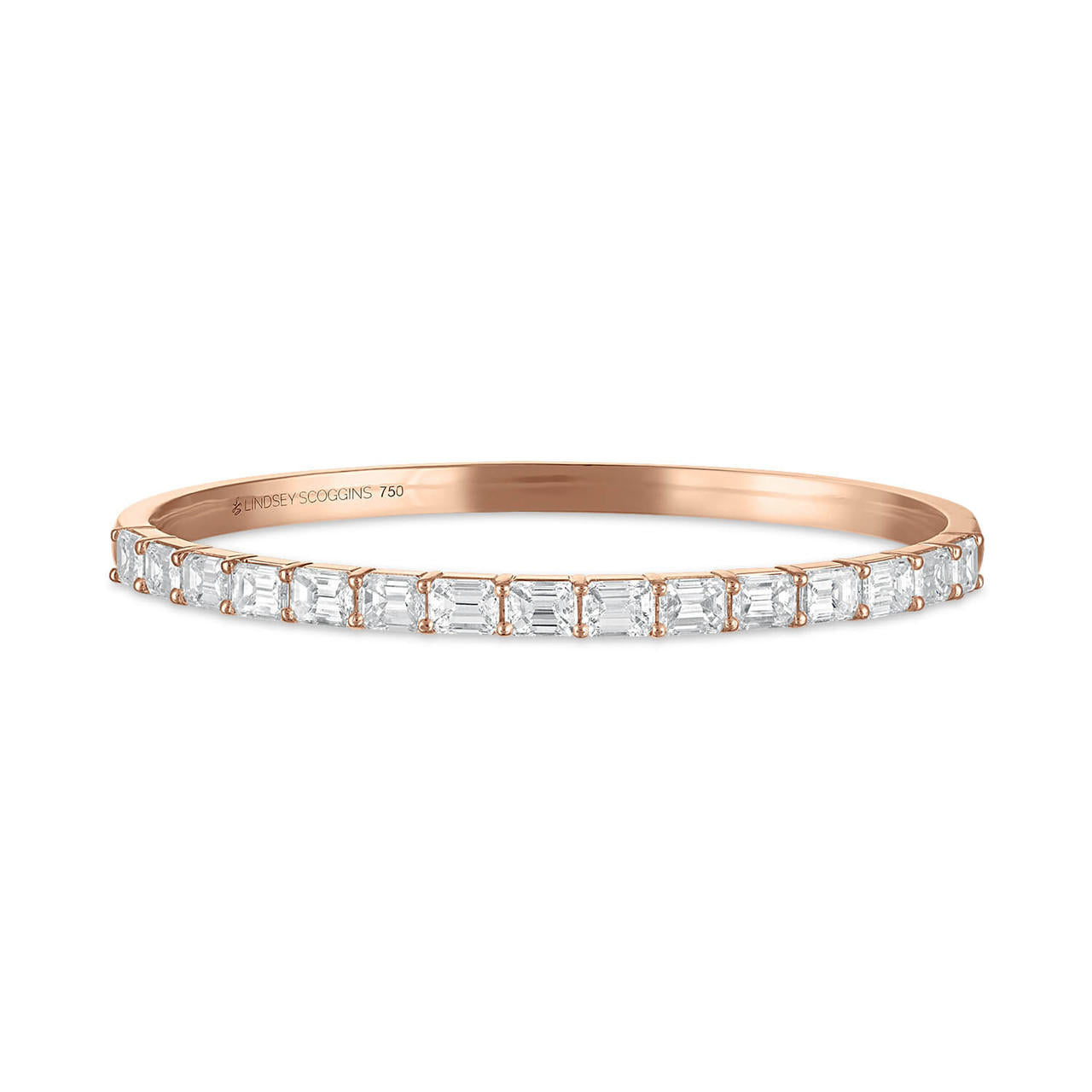
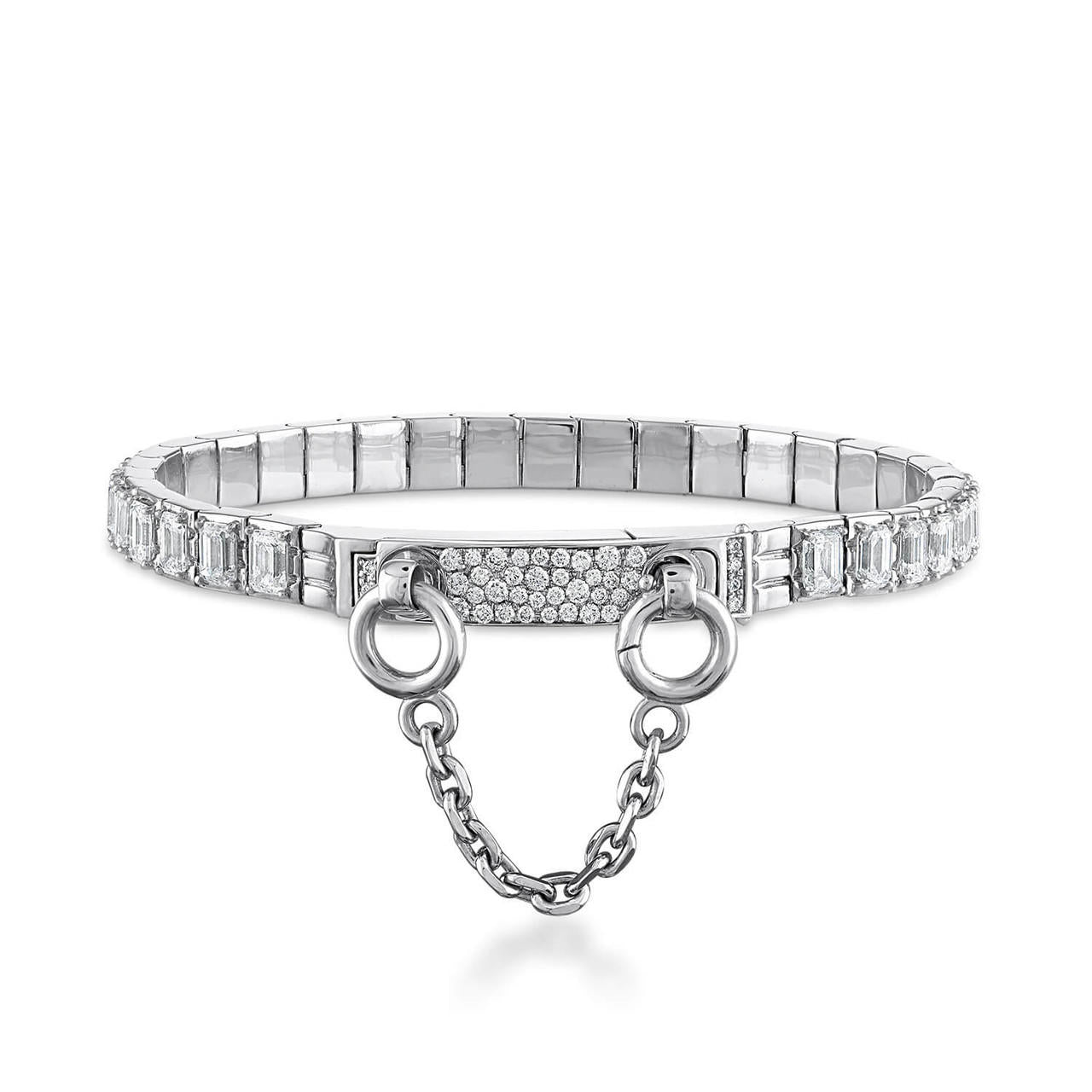
DISCOVER MORE TENNIS JEWELRY
Discover some of our tennis collection jewelry. Any of these designs can be customized with your choice of diamonds or gemstones, and with any bespoke personalized details.
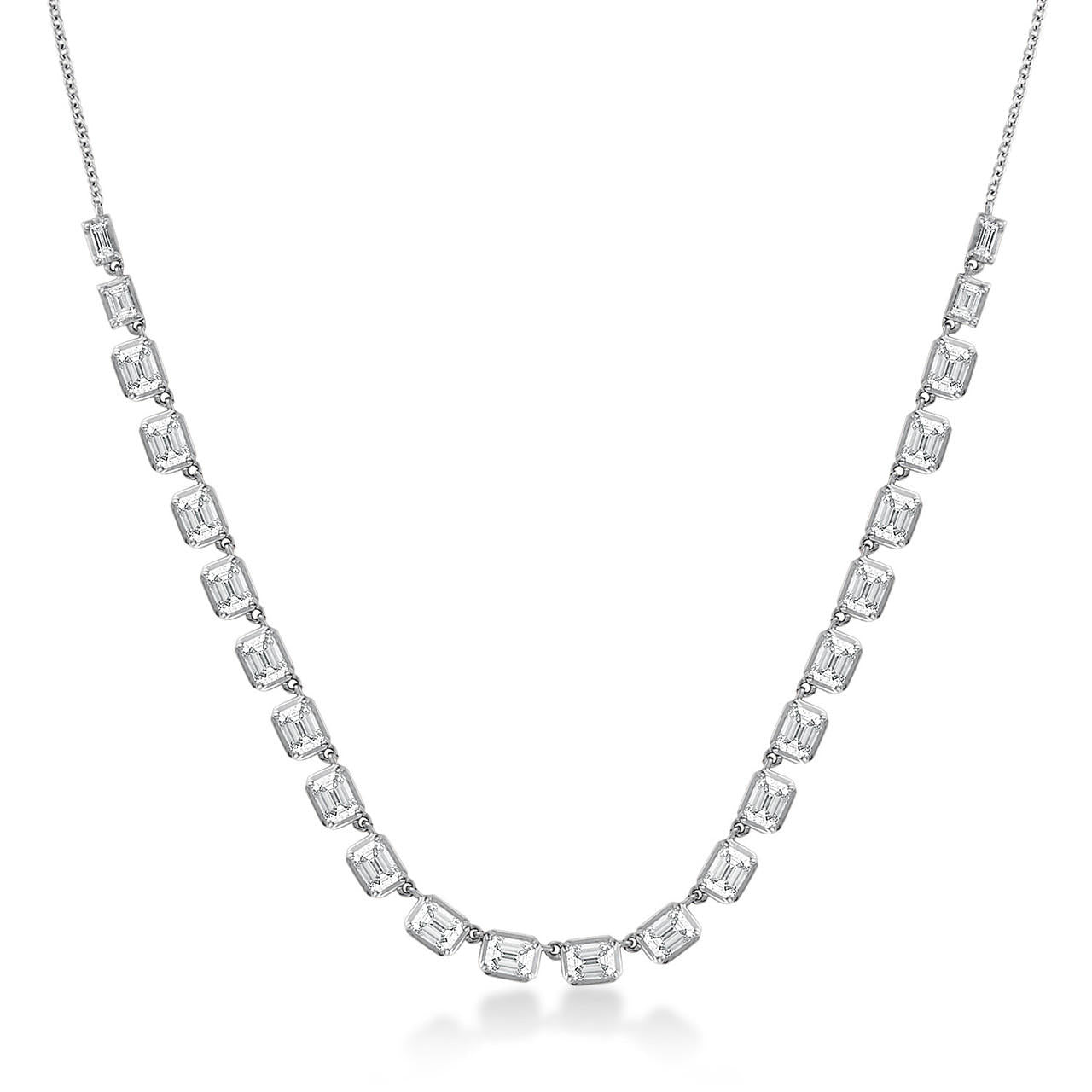

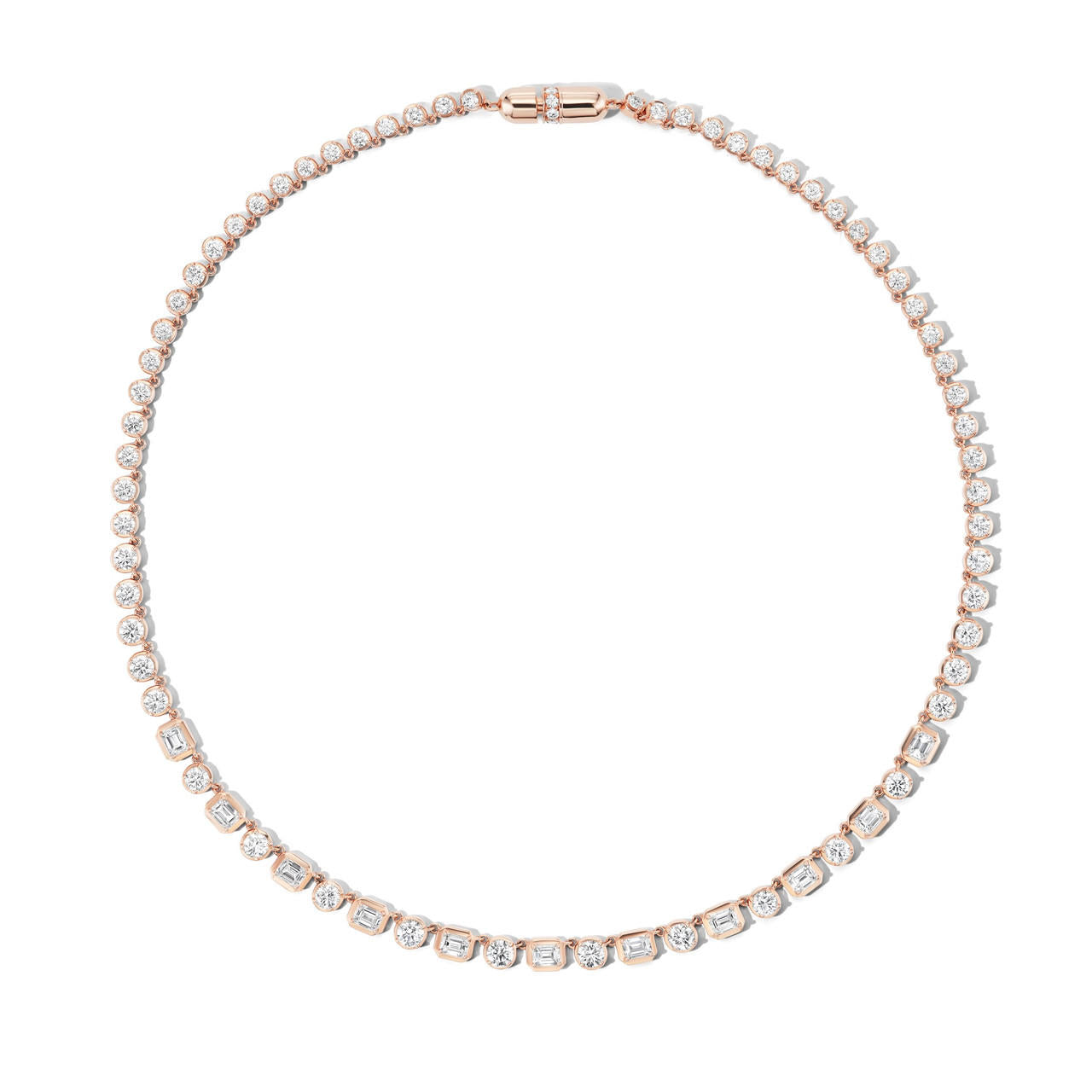
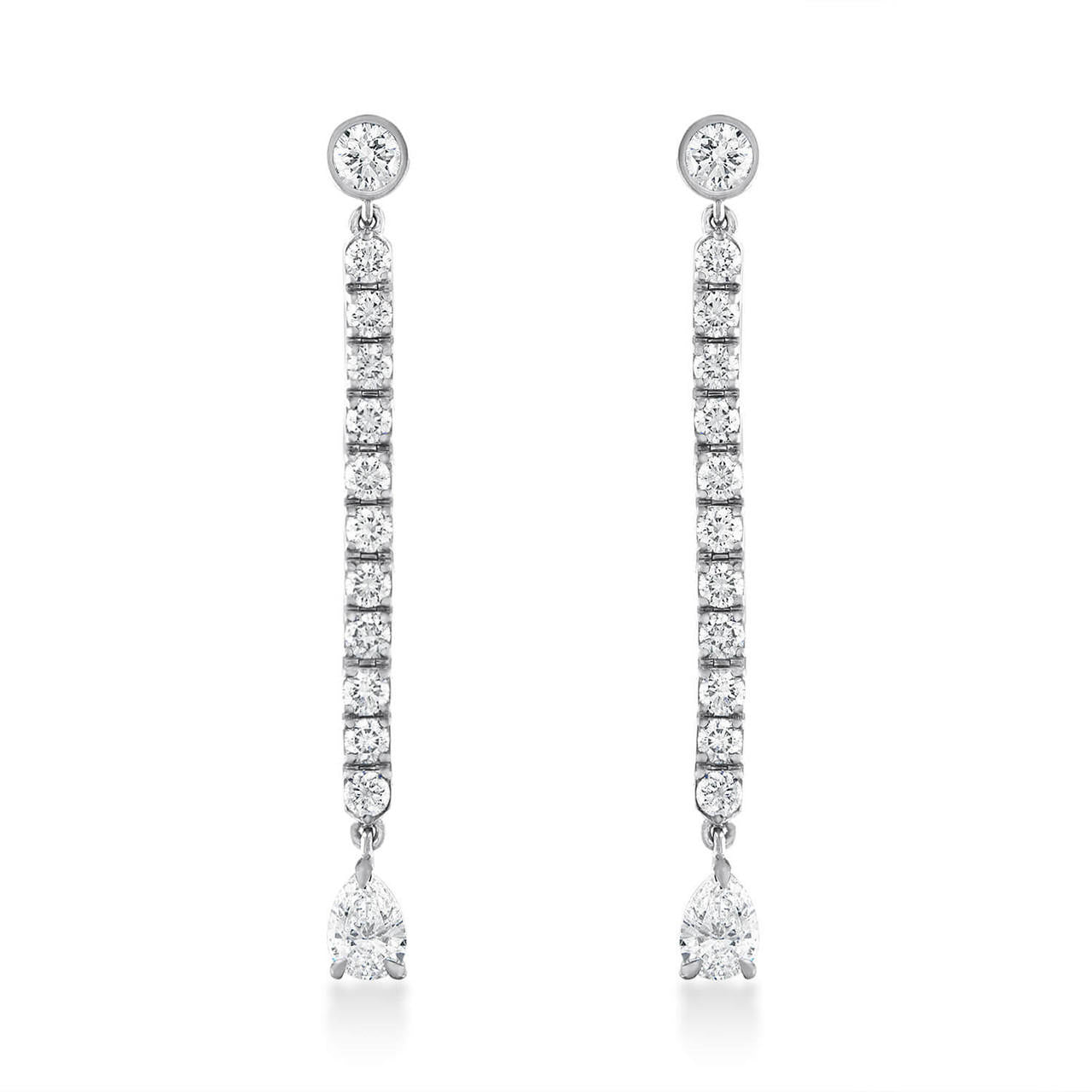

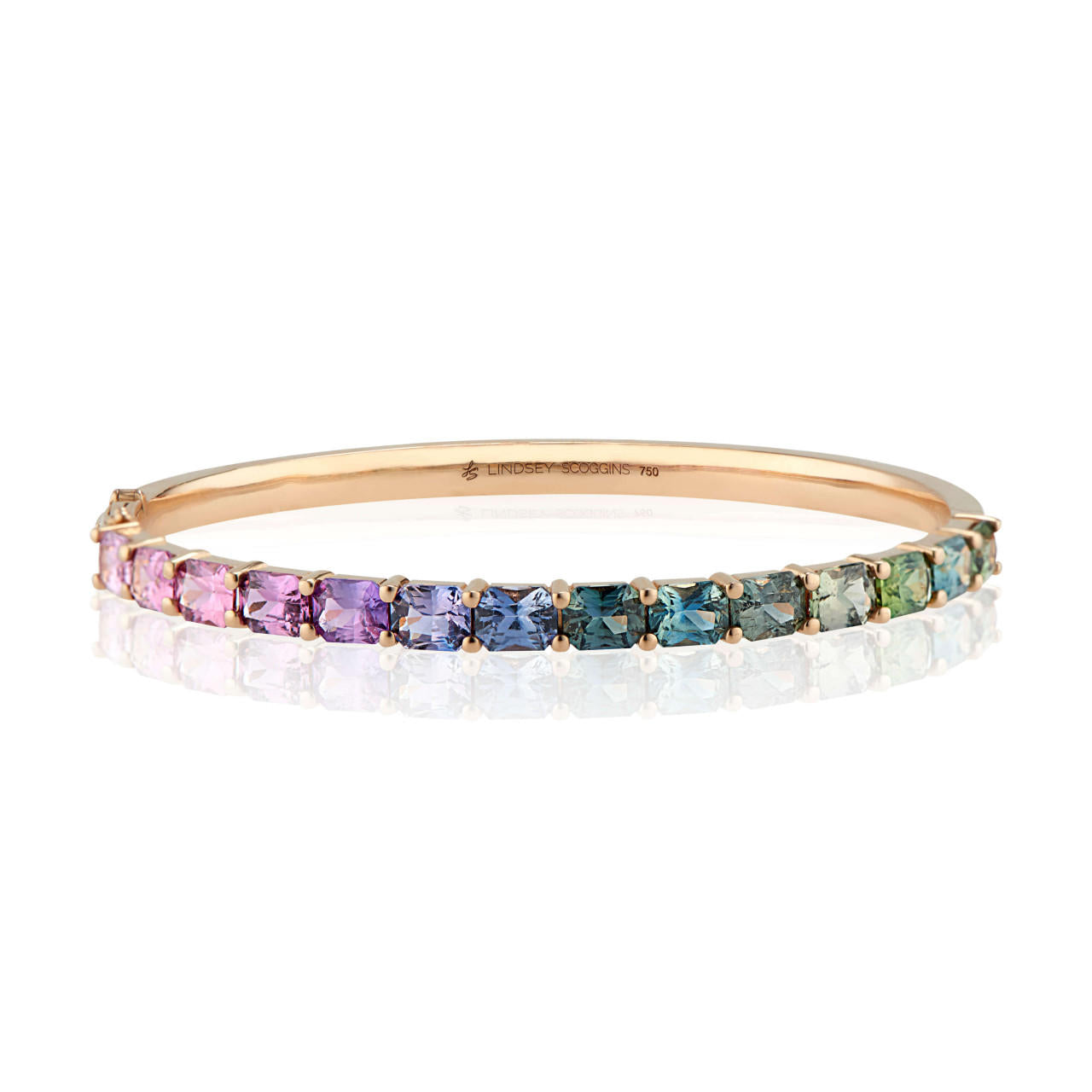


Contact us with any questions on any of the tennis jewelry shown here, or to schedule a custom consultation.
